"Women are the guardians of continuity. If the hearth moves, they move with it. Remember, it is the gypsy women who keep their men on the road."

~"Boomerang Love," Jimmy Buffett


Showing posts with label Belize. Show all posts

Blue Collar Salute: Mr. Guatemalan Bus Conductor Man

February 3, 2010

I often say that I love traveling, but I hate to travel. With very few exceptions, I rarely enjoy the actual process of getting from Point A to Point B, whether it is by plane, car, boat, horse, my feet, etc. If I could, I would choose to spontaneously teleport at my final destination, and skip the entire process altogether. Alas, until technology catches up with my imagination, I have had to rely on various forms of transportation. During our time in Central America, I experienced the entire spectrum of transportation in regards to comfort, speed, price and hygiene standards.

In Belize we crammed ourselves into ridiculously cheap, user-friendly buses, but we also had the comfort of the Rubicon our second parents used to drive us around. On our way to ATM, there was a comically-angry shuttle bus driver who cursed at anything and everything that slowed him down, not least of which included a group of small children who were trying to raise money for their school which had burnt down. In Honduras, I probably experienced the most variety within a short period of time. In one day, I took a private colectivo van across the Guatemalan/Honduran border and subsequently hopped a luxurious executive class bus (complete with plush, fully-reclinable seats, blankets, a safety video, and a bus attendant who handed out snacks and drinks) which drove me the rest of the way. In between transfers, I raced around the small town of Copan in a tuk-tuk, trying to find a money changer on a Sunday. The following day, I managed to sleep through a ferry ride that was so choppy, crewmembers were standing by with plastic bags and paper towels for seasick passengers vomiting left and right. Appropriately, there was also a very special plane ride back to Belize, but that deserves its own post.

Anyway, as memorable as these were, there was one form of transportation with a reputation that trumps them all: the Guatemala camioneta aka “chicken bus.” To set the record straight, either we were lucky during low season, or the name is a misnomer, because our ride was delightfully free of fowl and other barnyard creatures (although it wasn’t uncommon to see huge bags of fruit, furniture, vases, and other wares strapped to the top). Nevertheless, that didn’t stop it from being completely ridiculous. These brightly-colored buses were tricked out with flaming wing decals, olde English writing, music stickers, and other forms of ornamentation that transcend all conventions of taste. It was as if a 16-year old was given amphetamines, spray paint, and free reign to decorate the tour bus of his dreams.
While I never actually felt uncomfortable on the camioneta, they certainly weren’t designed with comfort or security in mind. The seats were made of a hard, slippery vinyl. There were no seatbelts, but there was a handlebar attached to the seat in front that came in handy as we rumbled through twisted mountain switchbacks. I had an aisle seat, so whenever we would turn into a curve, I would hold the bar while Zack would lean into the window and grab me by the waist, so I didn’t end up flying into the aisles. The native Guatemalans were either possess unusually strong balance or were wearing pants with remarkable traction, because they found our slip ‘n slide act highly amusing.

What I found particularly fascinating was the method of ticketing and payment. There was no ticketing booth in the bus station, you just hopped onto the bus. At some point during the ride, a conductor (separate from the driver) will collect your money and give you a handwritten ticket. I suppose that having a conductor comb the aisles is more efficient than having the bus driver pause to collect money at each stop. Also, rather than charging each person as they boarded, the conductor would wait for them to get situated and catch them on his next set of rounds. As the two of us were traveling longer distances than most locals, I had plenty of time to watch and observe this routine. It was incredible how they would simultaneously memorize faces, keep a mental tally of how much everybody owed, calculate each person’s pro-rated fare, and make change for the hundreds of random people who would hop on and off the bus. Nobody slipped through the cracks – there were no free rides, but at the same time, they never made the mistake of asking customers to pay twice. It really is a unique job which requires a number of different skill sets that are worthy of a Bud Light “Real Men of Genius” salute. Since it is unlikely that the American public would appreciate the nuances of a Guatemalan camioneta conductor, I settled for copying my favorite one:


In the meantime, I am still searching for that perfect form of transportation that is sanitary, comfortable, efficient, and minimally disorienting. Argentina is supposed to have stellar long-distance buses, so I’ll give them a go and let you know if they’re any better. For now, the best I have to offer is that I never board anything that moves without bottled water, Dramamine, a roll of toilet paper, hand sanitizer, and an easy-to-read book.

Friends in Low Places: Surfing the Parrot's Nest

January 27 - February 1, 2010

There is a superstitious side of me that thinks there's a lot of karma points to be gained in sharing kindness with strangers. Many of you know that I hosted several travelers at my house in Austin (often to the chagrin of my roommate) through a social network called Couchsurfing. It's often difficult to explain the concept of Couchsurfing to others, because most people tend to be cynical and mistrustful of strangers. I will be the first to admit that one has to have a certain level of faith in their fellow man (not to mention a healthy dose of common sense), or the system won't work. Nevertheless, after a LOT of research, I took a chance and started opening up our spare room to visitors from all over, each guest more gracious and unique than the next. I became an active member of the kooky Austin-CS community, some of whom have become close friends and showed me sides of the city I never would have seen otherwise.

After nearly 6 months of hosting, I was very excited to experience the surfer's perspective. A couple weeks before our trip, I was able to arrange a couple nights with the CS ambassador of the Cayo district in Belize. Although his place was located a little outside of the city center, we figured a couple free nights with somebody who really knew the area would make up for it. Little did we know that we would meet Marcus, this out-of-this world character with a huge personality and an even bigger heart. I remember that he always walked around in this pair of faded, whitewashed 80's style jean shorts. They call him the “White Mayan” because he did everything shirtless and barefoot, including our memorable Actun Tunichil Muknal tour (ATM is a ridiculously well-preserved Mayan site that is only accessible by hiking through the jungle, fording 3 rivers, swimming through a foreboding cave entrance, and finally climbing a ladder into the burial chamber). The moment we stepped foot at his place, he greeted us with a suffocating bear hug. That set the precedent for what would be several memorable nights in Belize.

To begin, their place is a freaking tropical paradise on the banks of the Mopan River. They call it the “Parrot Nest Lodge,” and it was just a fun, weird, jungle-living experience.

In the mornings, the place was bustling with the noise and activity you would expect from a busy household – kids getting ready for school, pots clanging in the kitchen, the washing machine whirring at all times. At any given time, you could open your door and see the family dogs hanging out on your porch. Yet at the same time, there was the wonderfully undomesticated aspect – fireflies which would swarm the backyard at night, unpredictable thunderstorms that would leaves us in the dark for hours. A wild agudi (we called it a muskrabbit) had made its unofficial home on the premises, so it became a regular visitor in the mornings. At night, dinner was a communal affair. We all sat at a big wooden table, enjoying Theo's (Marcus' lovely wife) unbelievable homecooked meals and drinking whatever wine or spirits guests were sharing that day. There was a blend of travelers like us who were just passing through, a few long-term guests who couldn't bring themselves to leave, and a few friends of the family who would swing by unexpectedly. Everybody was welcome.

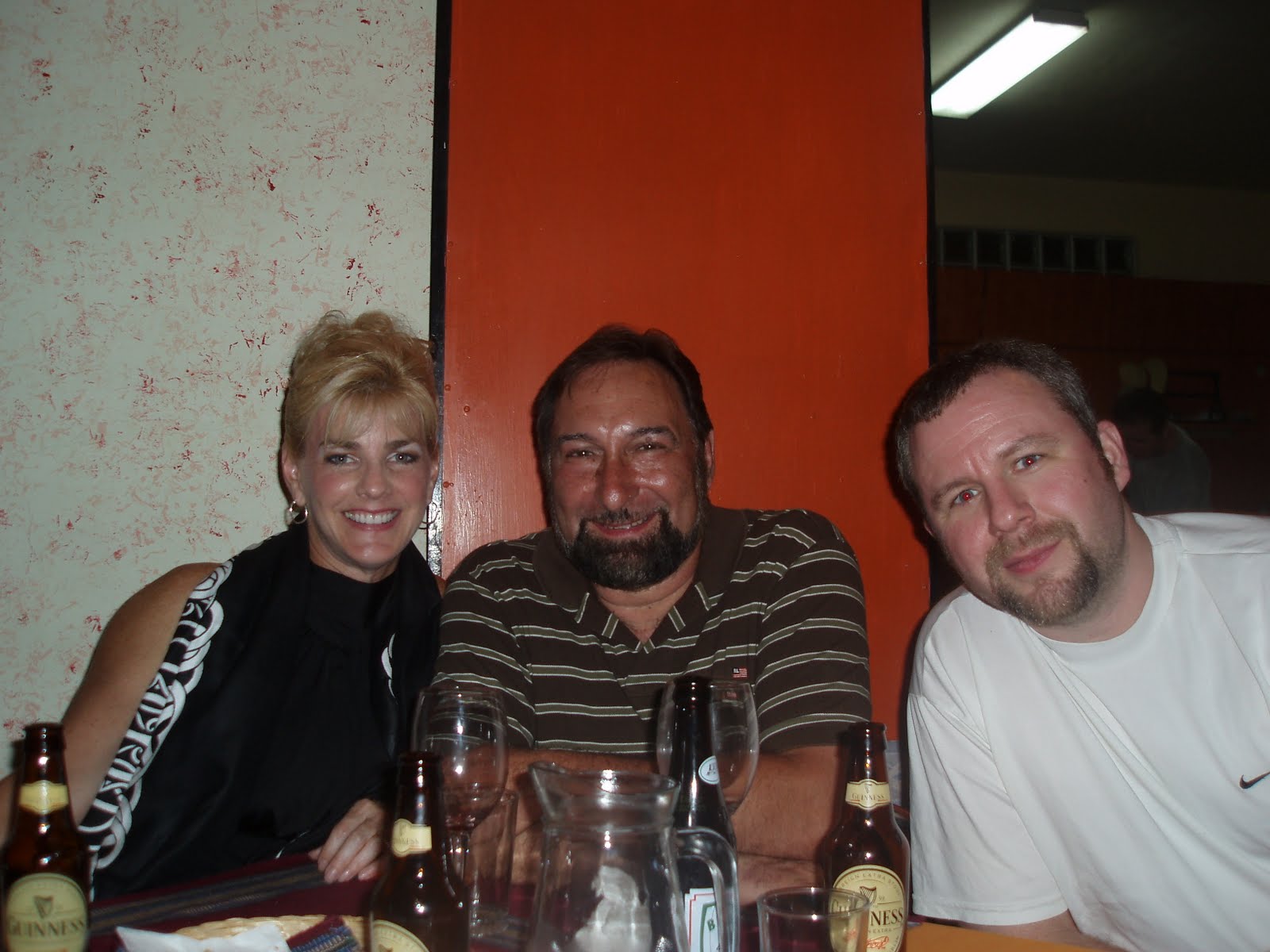
In particular, there was one couple who we grew particularly close to. From what we could glean from the little snippets of their “other life,” they were fairly successful B-list film stars who had decided to buy land in Belize. During the day they would meet their realtor and and visit different properties. Since there are no shuttles that go to and from Parrot Nest (besides Theo dropping off the kids at school), they would often drive us to town on their way to house shopping. I don't know if it was just our age, our resemblance to their own kids (probably more Zack than me), or just natural parenting instinct, but for some reason the took it upon themselves to be our caretakers during the trip. In addition to driving us back and forth, they fawned over us in the way only empty-nesters can. When were around them, we never went hungry or got lost. We joked about them being our “second parents.” To be fair, you can't help but feel a little childish begging for a ride. It's like being 14 years old all over again. As fun as it is to be a rough, free-spirit backpacker, I gotta say, once in a while, it just feels good to be taken care of. I guess kids will always be kids.

Our doting "second parents" and Jim, a guy we met at ATM

P.S. Incidentally, joining Couchsurfing has been one of the best decisions I've ever made. It got me through the rest of Central America, and it has been an immense help in Argentina. I've listed my CS profile as a link, so please feel free to check it out and contact me for more info.

4,000 Years of Civilization in a 40 Year-old Village

January 26, 2010

The dirt road that separates the Nu'uk Cheil Cottages and the Jaguar Preserve is only 10 kilometers, but due to bumpy terrain and unpredictable roadblocks, the ride usually takes 20 minutes each way. During this time, our Mayan guide Julio Saqui kept us entertained with stories about how the area had grown over the last several decades. He told us about Dr. Alan Rabinowitz, the famous environmentalist who established the world's first jaguar sanctuary here in the Stann Creek district. He told us about the British knight who taught English in his Dangriga high school, and helped him master his now impeccable English. He told us about his brother Ernesto, an accomplished conservationist recognized by the Audubon Society and a prominent member of the village council. Ever the modest and humble guide, it took us a while to finally learn anything about Julio himself.

He revealed to us that his long-time dream was to open a Mayan Culture Museum, and after many years of playing with the idea, he finally came up with a working prototype. Before he finally dropped us off at the doorstep of our hotel, he sheepishly asked whether we might be interested in seeing it before our tour the next morning. It's official opening would not be for another few weeks, so we would be getting a “sneak peek.” Deeply moved and honored that he was willing to share such a personal project with us, we accepted.

When we first arrived at the Maya Village Center, we walked past a thatched house on the way to our hotel. It was adjacent to Julio's tour office, so we assumed it must have been his home. Turns out, it was the actual museum. To better demonstrate the Mayan lifestyle, he had recreated a Mayan-styled house, complete with all the goodies you would find inside. As far as he knew, this full-sized model of the Mayan household was the first of its kind. While the lodgings may at first sight seem sparse and modest, a closer inspection (and a little more education) would reflect an economy of style that was beautiful, elegant, resourceful, and richly immersed in a deep tradition.

From top to bottom, the entire construction was handmade from the surrounding forest, whether it was the thatched-leaf roof bound together by dried vines to the woven hammock which swung in the common area. The real treasures, however, were the small details- the homemade broom which sat by the door, the various gourds and sticks which functioned as cooking utensils, even the simple artwork that decorated the walls. At one point we sat down at a table which turned out to be the stump of a mahogany tree – loggers had cannibalized the tree for lumber, but left behind a stump, which Julio was able to use. What was truly remarkable was that the entire home was completely functional in its current state. If he were to have lit the hearth, a typical household could have begun its daily routine with very little trouble. Nothing to move-in or “turn-on” - no electricity, no refrigeration, no running water. Every challenge we could fathom, this house came fully loaded. Even more fascinating, having lived with his British teacher and experiencing the so-called “privileged life,” Julio confessed to us that he still preferred the comfort of a hammock to a bed, and cooking from scratch everyday rather than re-heating food that was prepared before. That's no joke, as we learned that harvesting rice from the chaff, grinding corn for tortillas, and drying out coffee beans were all long, tedious processes. That morning, his wife had generously woken up before sunrise to make us some tasty, homemade chicken burritos for lunch. While it's a lifestyle I don't necessarily envy, it's one that I can't help but marvel at. The values of wasting nothing and using everything, the respect for nature, and perhaps most of all, the undeniable dignity and quiet satisfaction that stems from difficult, often thankless work – things which I feel us “first-worlders” sometimes lose sight of. As one of my friends in Honduras described it, “It's like camping all the time!”

The presentation came full circle, as it made the actual trek through the rainforest all the more meaningful. Now whenever he pointed out a particular species of tree or plant, we could visualize the final product and truly appreciate the immense amount of work that went into making it. If you ever have the opportunity to take an interpretive nature tour with a native guide, take advantage of it. Sure, you can follow the trails on your own and admire the prettiness of all the leaves and flowers, but it's a completely different perspective to experience the forest as the source of somebody's entire livelihood. We got to play with the sap from a rubber tree, smell wild vanilla bean, taste wild plums and nuts, and even learned about medicinal plants which are used as poison ivy treatment, breath freshener, or even birth control. (I'm not sure when I'll necessarily be putting any of this knowledge to practice, but I figure that it doesn't hurt to know).

Between staying in a family-owned cottage and hiking through an immaculately maintained nature preserve, I was impressed with how the entire town came together not only to protect their strong traditions, but to share them with others. I was particularly moved by Julio's Maya Culture Museum, a labor of love and a level of passion we should all strive for. When it comes to locally-owned and operated businesses, you just want to see them succeed. Hopefully, more travelers in Belize will take a chance and visit this truly unique living community – scorpions and all.

A typical Mayan living room/bedroom


The various stages of making coffee


Zack, Sophia, and our Mayan guide Julio

Unexpected Visitor: Roughing it Maya Style

January 25, 2010

On the crowded Southbound bus, we were the only two people who requested a stop at the Maya Center Village. As it turns out, we were the only two people who were visiting the entire town. That suited us just fine – after three days of lounging on the beach, we had wanted an intrepid leg of the trip to improve our travel street cred. Our plan? To march through the Cockscomb Basin Jaguar Preserve. Twice. Once during the day, and again at night, when a different set of crawlies and beasties come out. Because we were arriving in the afternoon, we actually did the evening tour first.

With nothing but our flashlights and our Mopan Mayan guide, we spent two hours hiking through the trail. We crept in silence, straining to listen for the slightest movements –a rustling in the bushes, the whisper of the tree branches above. Although we could not see much, there was ample evidence that we were not alone in the forest. Some of the interesting things we lucky enough to catch were some nocturnal pigeons (just as dumb as their circadian brethren), a kinkajou leaping through the treetops, a dizzying queue of leafcutter ants which stretched for several meters, leftover nutshells from wild boars, and the proverbial jackpot: a fresh pair of jaguar paw prints from an adult female and her young cub. At one point during our walk, our fearless guide suddenly slammed his palm onto a log. He emerged with a coral snake slithering in his hands - yes, a “red and yellow, kill a fellow” snake. That's a level of badassery that deserves its own special category. By the time we returned to our hotel room, we were feeling pretty pumped up. That is, until we noticed an unexpected visitor in our room:


It's one thing to pay to see potentially dangerous animals in their natural habitat, it's another thing entirely to see one suspended inches above where you planned to sleep. Our immediate feelings were a healthy level of shock, followed by a less natural feeling of bemusement. After assessing the situation, Zack ripped off his boot and heaved it at the wall, knocking most of the scorpion off the wall behind the bed (I say “most of,” because various parts of it were still stuck... I leave that to your imagination). We hadn't had 30 seconds to catch our breath when a tail-less scorpion emerged from under the bed, scurrying wildly along the floor. Wide-eyed, I screamed, “IT'S NOT DEAD! IT'S NOT DEAD!” It was headed directly towards me, so I was yelling more to myself than anything. Since I was perched over the bed, I had the most optimal angle. Lifting my hiking boot into the air, I waited until it skittered directly underneath its sole and let gravity do its work. There was a satisfying thud and subsequent crunch. Direct hit. Tentatively I lifted my boot, only to find the thing feebly skittering around, refusing to die. Stubborn bastard. By that point, Zack had retrieved his boot from behind the bed and put an end to it once and for all. My hero.

Needless to say, that night we took the extra time to hang the mosquito net, AKA the “scorpion guard.” Additionally, we safeguarded ourselves by zipping up all our luggage, putting our shoes in bags, etc - not that it would have done much good, considering these scorpions seemed to have Wolverine-level healing powers.


The next morning, we casually mentioned to the owner that a large scorpion had somehow made it into our room. Unfazed, she shrugged and smiled. “It would hurt you, but it wouldn't kill you.” She seemed completely unperturbed by the incident, and it probably at that exact moment that we had our Avatar “You're not in Kansas anymore” moment. At any reputable hotel or guesthouse in the US, a poisonous pest in the room would have triggered a wave of obsequious apologies directly from the manager, empty promises of immediate action, comp'd rooms, free breakfasts, a voucher for a future stay – just some good, old-fashioned American ass-kissing. Here, apparently anything less than death is not a cause for immediate concern. Oddly enough, that experience only added to our stay. It was terrifying, but also kind of charming. Welcome to Belize.

Borrowed Time: Racing the Sun in Caye Caulker

January 23, 2010

In 1961 Hurricane Hattie ravaged the coast of Belize, battering the reefs and actually cracking the island of Caye Caulker in two. When we were returning from our snorkel tour, however, the rift now known as the “Split” served only to frame a sunset that was already made-for-postcard beautiful: a kitesurfer gliding over the water, the dark silhouette of his parachute bathed in the glorious backdrop of a Caribbean sunset. Breaking the silence, a crewmember said “It is okay to shed a tear.”

Minutes beforehand, he and the captain had anchored the Ragga King so we could catch the sunset before finally heading back to the docks. This was to be the capstone to a day full of activity, amazing wildlife, great company, and generous amounts of potent rum punch.

The schedule consisted of three snorkel stops, each exponentially more impressive than the last. The Coral Gardens in the Caye Caulker Reserve was our first site. Plagued by unregulated overfishing, this location served little purpose besides getting landlubbers acquainted to kicking with fins and breathing through a snorkel. While the Caye Caulker Reserves are right off the shore, Hol Chan takes longer to get to, and as a protected reserve, it only allows visitors to enter with a designated guide. For this reason that the tour is only offered as a full-day package. It is well worth the extra time and money – for an extra $15, we had the chance to swim amongst a swarm of nurse sharks and stingrays, watch the guide coax a massive grouper straight into his arms, free dive under a cove where there were a nest of parrot fish attempting to hide from us, and have green turtles flip around our feet. Incidentally, they must be some of the happiest creatures on the planet, along with puppies, dolphins, and otters. (If you're wishing that we had an underwater camera to capture all this, think about how we must feel).

When we climbed aboard from the last stop, ecstatic about all we had seen, the disappointing realization sunk in that we had done our last swim and had to begin the long haul back to shore. Fortunately for us, the crew at Ragamuffin Tours was adept at keeping us distracted in the interim. To begin, they are one of the few tour companies that uses a sailboat. One can forgive the slower pace when you compare the relaxing rhythm of the wind beating against the massive canvas tarps to the boat mechanical sputtering of a boat motor. We were also accompanied by the singular sounds of Caribbean music. Under normal circumstances, I believe most of us could agree that reggae music can be kind of... well... annoying. That predisposition dissolves once you're actually at an island location. None of us seemed to mind that we had listened to what may have been the entire Bob Marley discography. Twice. This may also have to do with the 10 gallons of rum punch they made-- the allegedly “small refreshments” promised in the brochure. There was a 17-year who couldn't partake in libations, so the captain gave her the distinct privilege of steering the boat. This privilege was stricken when he finally realized she had been driving us even further away from our destination, but by that point any lingering hints of American urgency or scheduling had long fled. We were on island time.

It's for this reason that there were no complaints about an unexpected stops or delays. Which brings us back to the beginning – a completely impromptu sunset tour. As we all know, the sun always sets a lot faster when it is being watched. Giddy with a combination of exhaustion, dehydration, and inebriation, we shared a quick, fleeting moment of hazy appreciation. Then, rather unceremoniously, one of the crew members wrapped his arms around Zack and forced both of them into ocean. Laughing hysterically, we all joined him in the warm water – finding yet another excuse to keep the day going.