"Women are the guardians of continuity. If the hearth moves, they move with it. Remember, it is the gypsy women who keep their men on the road."

~"Boomerang Love," Jimmy Buffett


Showing posts with label Tucuman. Show all posts

Ask Jeeves - He Makes Dreams Come True

When I hearken back to my days as a mentor at TIP and my CELTA training in Costa Rica, I have fond memories of the ridiculous trainings and activities we used to do. As a 20-something college student, I have found myself doing icebreakers with toothpicks and fat smelly markers, building Macgyver-styled devices with rubberbands and legos, and reciting jazz chants to demonstrate past participle. Interestingly, one of the recurring themes that appeared at both jobs was the “criticism sandwich.” The general idea is that when you need to correct or critique a pupil, you should cushion the criticism between two pieces of positive encouragement to soften the blow. It would go something like this: You bring up a really good point. I’m not sure it’s the best solution, but you’re definitely not a complete idiot.

Get it? The ego-stroking is the “bread.” Cute, right? It sounds cheesy, and it makes the students sound like fragile, sensitive butterflies, but you wouldn’t believe what a successful strategy it was. I suppose it’s just human nature to like ending with a positive note, almost like closure. Well, if you scroll down a bit, you’ll see some traces of a Negative Nancy. Those of you know that know me well know that it’s just not my nature to be a complainer. In truth, it was always my intention to write a 3-part series about buses, and I was literally saving the best for last. I know I already shared my “good” experiences, but this trip wins in every category.

Interestingly, the best bus ride I took in Argentina happened to be the last one of our epic trip, and it mostly happened by chance. There were a combination of factors at play – both of us were slightly under the weather, we were emotionally drained, and we really didn’t have any desire to hang around the Buenos Aires station any longer than we needed to. Since it was such a high-volume station, there were frequent buses to Tucumán, and we just bought tickets for the next bus available. It just happened to be the first-class bus on Vosa, one of Argentina’s luxury fleets.

Wow.

I remember stepping onto the bus, and being greeted by a smiling young gentleman in a maroon vest, holding a small basket of mints and hard candies. He was going to be our attendant for the duration of the trip. I don’t remember his name, but I secretly wish it were Jeeves (linguistically implausible, because in Spanish, it would be pronounced ‘hee-vez’), because that’s exactly how bloody accommodating he was the entire ride.

Anyway, we headed to the upper floor as usual sank into our plush leather seats, and like little children testing out a new toy, immediately, we pulled the lever. We had no intention of actually sleeping right away, we just wanted to see what “class” our seats were. Fortunately, as an ejecutivo bus, all of the seats were the full cama, reclining back to an orgasmic 180º. Moreover, as the bus pulled out of the parking lot, we realized that there were less than 10 passengers on the top floor. It was going to be a good night. But it was still early, and we had several hours of reading, watching movies, and killing time before they would turn down the lights.

I shouldn’t have doubted, though, because Jeeves had everything covered. A couple hours into the ride, he pranced up the stairs, clapped his palms together, and gleefully asked if we were ready for dinner. Uhm… chyeah. I suppose on civilized buses, we must observe the formalities. He nodded as if to say, “Very good sir,” and proceeded to snap our tray tables into place -- the tray tables had attachments that connected them to the ends of the arm rests, creating tables, but essentially trapping us into our seats. As a young, 21st-century, independent-minded woman, I felt capable of matching Slot-A to Slot-B, but ever the gentleman, Jeeves insisted. It made me feel a like a baby in a high chair.

Selene hungry! Nom nom nom.
Absently, I wondered if they had any alternative arrangements for our more heavyset passengers, but then I remembered that we weren’t in the United States, and Kevin Smith wasn’t likely to take the Vosa bus.

Our meals were brought to us, vacuum wrapped per usual. Before we could get disappointed by the seemingly paltry portion-sizes of the servings (although they were still much better than any other bus fare we’d eaten), Jeeves was quick to inform us that these were just the appetizers. After we finished them, he brought out the hot meals which were wrapped in foil. There was something very satisfying about peeling off the foil and being bathed in steam. At that point, I was so impressed by the service, I would not have been surprised if they actually had a functioning oven somewhere in the galley. Next, it was time for drinks. In true unnecessarily cute fashion, Jeeves was carrying all the drink options in a wicker basket, as if picking your beverage from a basket was somehow classier. Aside from your typical fountain drink options (water, Sprite, Coca-cola, etc), there was also wine. Uh-oh, dilemma. The white wine would have complemented my entrée very well, but I wasn’t sure if the wine cost extra like it did on planes. Letting myself get wrapped up in the sheer spectacle of the entire experience thus far, I suddenly worried about making a social faux pas by asking whether it was free. To avoid any shameful acts of impropriety, I took the safe route and asked for a soda. In hindsight, I don’t know what I was so worried about… as if Jeeves would have cast me off the bus for asking a perfectly legitimate question. I’m not even sure who I was worried about judging, since there were only 4 other people within earshot – one of whom was my roommate, and the other 3 were French students who didn’t understand Spanish. At any rate, I allowed myself to indulge in my silly Austenite melodrama. That is, until I heard one of the French students behind me utter one of the few Spanish words she knew: vino. Chancing a glance behind me, I saw Jeeves graciously pour while the girl giggled. There was no exchange of currency, no transaction. Damn. It was like that episode of Family Guy where Peter ordered a salad, but really wanted soup. “But it was too late.”

With the timing of a competent waiter, after we all had an appropriate amount of time to nosh on our dinners but before we had cleared our plates, Jeeves came by again with his magical basket to ask if we wanted a refill. Gasp. Did I dare? Switch beverages? I decided to press my luck. I was feeling trepidation, but I played it cool and asked if I could try the wine. Jeeves didn’t even blink as he happily poured me a new cup. Success! Incidentally, the wine tasted awful, but I was in such a good mood at that point, I didn’t care. When he came around a second time, I had another one. It helped make the movie we were watching, a dubbed version of “Leap Year,” seem much more touching and well-acted than it probably was.

As to be expected, the pacing and service of this ride was impeccable. I’m fairly certain Jeeves came up and down the aisle a couple more times with more drink refills, but I had to turn him down. After dessert (yes, there was dessert!) they turned down the lights, but for those of us that weren’t quite ready for sleep, they had the courtesy to put on another movie, “I Now Pronounce You Chuck and Larry.” The cheap wine could not have been more appreciated.

As the credits started to roll, I think most of us were ready to turn in for the night. Ever the attentive innkeeper, Jeeves made one last run-through of the aisles. I assumed he was checking on the blanket/pillow situation, so imagine my surprise when he asked, “Whiskey?” Come again? The confusion must have shown on my face, because Jeeves resorted to pantomime, throwing his head back as if sipping a shot. Seriously? A nightcap? They were really offering me free liquor. I have never felt more bourgie. I felt like I needed a maroon smoking jacket to go with my brandy. It was one of those rags-to-riches “Pretty Woman” moments where I didn’t know what to do with the escargot pliers. It was like the first time I was in a European hotel and saw a bidet. I felt so undeservedly privileged, that I was too embarrassed to accept. That’s right. I was shamed into turning down free booze. I went to sleep feeling slightly dirty… both because I was being treated like a character in a Fitzgerald novel and also because it had probably been a couple days since our last shower. But the pillows were so damn comfortable and squishy that it didn’t make a difference.

The next morning, Jeeves was up bright and early. Like a doting mother, he wanted to make sure we were up and at ‘em, since we were nearing our destination. To gently wake us up, he offered us our hot, steaming caffeinated beverage of choice. It was just like a Folger’s commercial. Sure enough, shortly afterward, there was breakfast. Yes, it was an Argentinean breakfast, but the thought was nice. And either way, we were getting close to Tucumán. And as we rolled onto the platform, Jeeves gave us a little gift box full of treats to send us off.

It hung on our wall for the rest of the year.

Planes, Trains, and Automobiles: Bussing it throughout Argentina

As promised, after logging over 150 hours of bus travel (and counting!), I can comfortably say that I’ve become an expert at bussing through Argentina.  I have experienced every level of “bus,” which has become a fluid term, since it includes everything from a modest 10-seater van which took us from Rio Gallegos to El Calafate to the Marga bus which ended up boarding a ferry to cross the Strait of Magellan:


As I started writing, I quickly realized that the variety and breadth of these experiences could not be encapsulated in just one post. As such, I'm taking a page from my food post, and splitting this entry into a three-part series (sort of like a Horcrux, only not the consummation of all that is evil and unholy). Over the next few days, I hope to shed some insight on one of the most fundamental aspects of traveling in Argentina, while hopefully dropping some amusing anecdotes along the way. 

Part 1: The Good, the Bad, and the Ugly

When the buses are good, they’re awesome.  When they’re bad, they can be miserable. Anybody who's traveled knows that the smallest complications (delays, feeling under the weather, forgetting your camera, etc) can affect your perception of the company, and it can often difficult to separate those issues from a genuinely bad experience with the busline/airline/travel agency itself. Nevertheless, I have endeavored break it down as objectively and honestly as possible. 

Food
  • Good: A standard long-distance bus ride with servicios usually provides food at the appropriate mealtime. Some bus companies have provided pretty solid offerings, including a protein entrée, a side of bread or rice, dessert, and occasionally a beverage. If the bus times don't necessarily fall during mealtime, they may still offer a snack box or drink. 
  • Bad: Some cheaper companies settle for really stale vacuum-packed ham and cheese sandwiches on processed white bread which just leave you thirstier than when you left. 
  • Ugly: It can often be unpredictable in what situations they will serve food. The very same company that served some of the best bus food I have eaten also left us starving on the 14 hour ride from Trelew to Rio Gallegos. Foolishly, with each passing bus stop, we refrained from purchasing a snack because we thought to ourselves, “Surely they must feed us soon.” Silly us.


Buses 
  • Good: Interestingly, the seats are classified by angle of recline. The standard “economy” seat is a semi-cama (semi-bed), which reclines so the passenger can sleep in a semi-prone position. I have never really experienced problems sleeping in this position, but then again, I’m short enough to fit in the seat. If you are willing to spend a few extra pesos (I’m talking roughly the equivalent of $5USD), you may get a full cama which unfolds into a completely horizontal position. In this regard, an executive or first class bus is luxury when it comes to leg room, comfort, and cushiness. An advantage to the cheap seats is that they are on the top tier of the buses.  If you buy your tickets in advance, there's a good chance you can get a front seat with a little extra leg room and a fantastic view. 


Front row seats
  • Bad: The complete disregard for any semblance temperature control. In the summer, the buses are almost always about 10º too cold, resulting in my wearing a laughable number of layers for a tropical climate.
    Entirely too many layers for a visit to Iguazu in May
  • Ugly: During my first long distance ride to Resistencia (about 12 hours from Tucumán), it was uncharacteristically rainy throughout the entire country, and it rained the entire ride. It was as if a storm cloud was following me all the way to my next destination. Since I wasn't driving,  this would normally be a minor inconvenience at most, if not for the small problem of the leaking ceiling dripping cold rain water over my head.


Entertainment
  • Good: Some rides are timed remarkably well, so there are very few moments of idle dead time where you’re staring blankly out the window or sleeping for lack of anything else to do. During these rides, the conductor keeps a steady cycle of meals, movies, and the occasional game of bus bingo to keep our circadian rhythms as normal as humanly possible. In particular, some of the bus rides have showed some very high quality boot-legged movies, including blockbusters like “Sherlock Holmes” and Academy Award winners like “Hurt Locker” and "Blind Side." 
  • Bad: If the conductor can’t be bothered to turn on the DVD player, they will turn off the lights at 8PM and expect you to sleep until morning. 
  • Ugly: Some of the awful straight-to-DVD movies that they wouldn’t even bother releasing in the US, normally starring either Rob Schneider or Michael Jai White. 


Bus Stops
  • Good: Long-distance buses usually make several stops along the route. On an overnight bus, a considerate bus line might turn on the lights when they approach a major bus station, so people who will be disembarking know to wake up and start gathering their belongings. A particularly attentive conductor may even announce the stop for people too disoriented and groggy to notice their surroundings. An exceptional conductor will announce exactly how many minutes the bus will hang out in case you need to make a bathroom or snack run. 
  • Bad: Not knowing which stop you are at (bus stations are often unmarked), and out of fear of missing your stop, being forced you to stay awake for several hours, straining to catch a kilometer marker or some city sign to orient yourself. 
  • Ugly: Not knowing whether the bus is stopping for a break, to refuel, or to drop somebody off and being so paranoid about being left behind, that you end up holding and waiting when you really, really, need to use the bathroom.


Scheduling
  • Good: A bus originating from your destination, so it departs on time and arrives relatively close to the ETA (approximately within 15 or 30 minutes). 
  • Bad: Mechanical or electrical problems that cause you to be stuck in the Resistencia bus station for 3 hours, after only having traveled 17 kilometers. 
  • Ugly: A 24-hour transportation strike on the day you were originally planning to travel from San Juan to Bariloche: the longest leg of your journey (approximately 16 hours)in which you had bought the tickets a week in advance in anticipation of high season.  
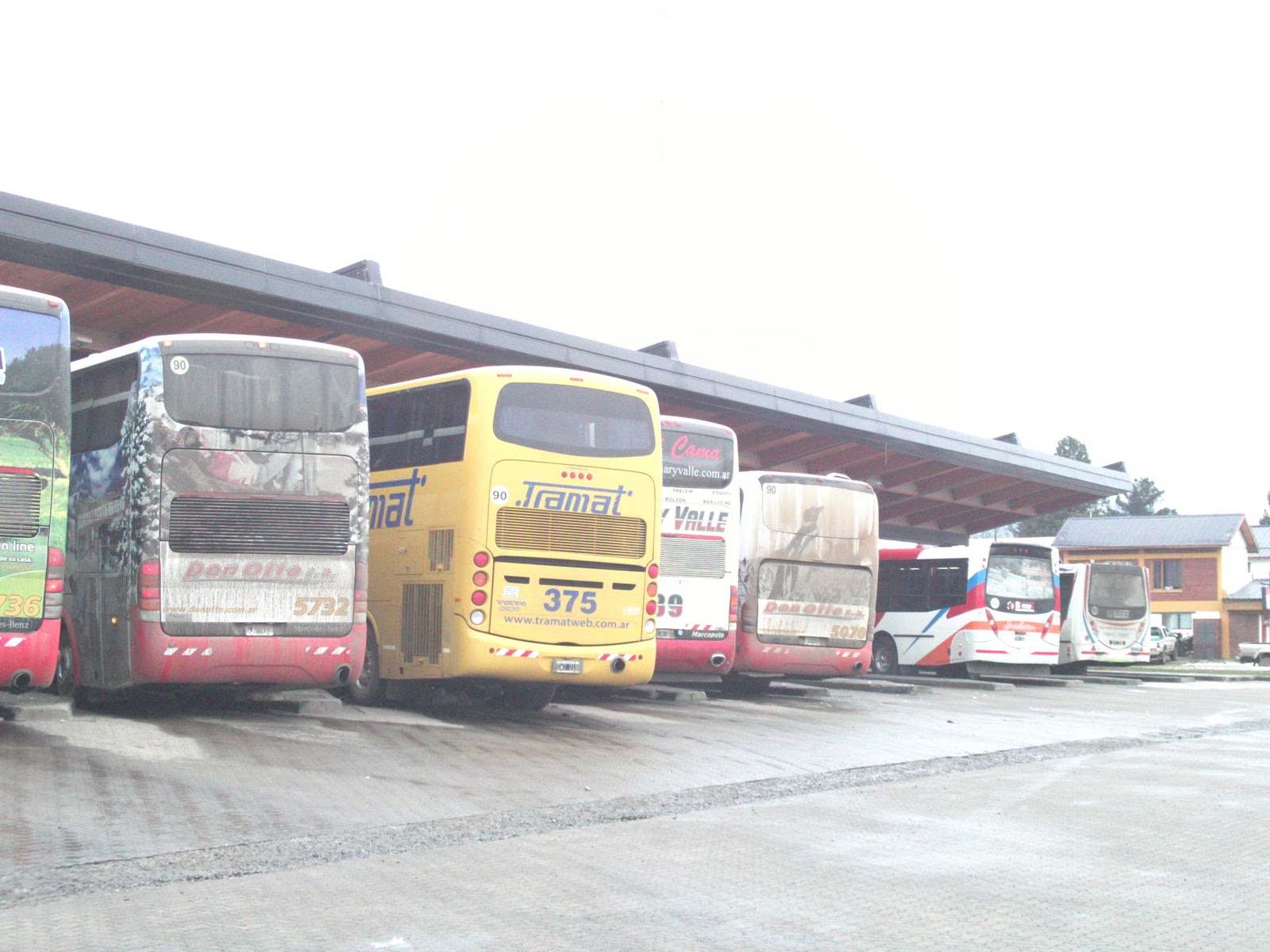
A noble fleet of buses

It's Raining Ash... Hallelujah? Springtime in the Garden State of Argentina

When I initially received my assignment from Fulbright, I had never heard of Tucumán. As any self-respecting millennial would do, I immediately set out to snoop around with my Googling and Wikipedia-ing skills. The information available was scanty, but the nickname that kept popping up was El Jardín de la República ("The Garden of the Republic").  My first reaction? “Great, I’m going to live in the Jersey of Argentina.” To be fair, I have never been to New Jersey, but through various media outlets, I have gathered that it is the punchline of almost all New York jokes, and there is an explicable infatuation with jagerbombs, housewives, Zach Braff, and people with epithets like "Snooky" and “The Situation.” As yet, I have yet to see any references to actual gardening.

It was the same… ahem… situation when I initially arrived in the province. Apart from the green hills of Yerba Buena and San Javier nearby, there did not seem to be much in the way of flora or exceptional produce. Although it took nearly 6 months, Tucumán, at least, is finally beginning to live up to its nickname. Spring is in the air – birds are chirping, the days are longerl the stores are liquidating their winter collections; huge, plump strawberries are being sold by the kilo; and perhaps most notably, the flowers are in bloom.  Suddenly, the city has erupted in a burst of bright yellows, pinks, and oranges. Naturally, being from the Northern hemisphere (they refer to all Americans as yanquis, regardless of their actual home state), I mentally categorize these hues as “Easter colors,” despite the fact that it is September.  Some of the streets are lined with rows and rows of lapacho trees, creating an endless stretch of pink, which delights the girly girl deep inside of me (very deep). The end result is magnificent.


Additionally, in a stroke of administrative genius (rare in these parts), somebody had the brilliant idea to plant orange trees around the city. The oranges themselves are inedible, so my theory is that they were planted for the express purpose of providing citizens with enjoyment when the azahares (orange blossoms) bloom in the spring. These creamy white flowers emit the most intoxicating, mouthwatering scent – its’ like vanilla mixed with jasmine mixed with honey, and a hit of citrus. It’s romantic and sexy and spicy all at the same time. Every time I chance to stroll underneath its branches (which is easy for me, because I’m short), I close my eyes and inhale deeply.


So it’s probably no wonder that I have been hacking up a dry storm at night for the last couple weeks. You see, in addition to being the season for pretty flowers, pleasant outdoor constitutionals, and holding hands, spring is also the time that farmers prepare their sugarcane for harvesting. Tucumán is actually one of the largest producers of sugarcane in the world. So what is the fastest, most efficient way of processing large quantities of it? Why, burning acres and acres of field, of course.  As a result, even on the sunniest days, there is an unpleasant grey haze of dust and smoke that lingers in the air (I guess the Jersey metaphor goes both ways).
That's not precipitation or fog. That's smoke. 
On windy days, the particles in the air are painful to the point that people wear sunglasses and scarves to protect their eyes. On calmer days, the debris settles on the ground, sidewalks, windows, and cars creating an oppressive film of dust on every flat surface. It has become such a hazard that Weather.com sometimes lists the Tucumán forecast as “smoke.”
 An actual screenshot of a Tucumán weather forecast. 
As luck would have it, my body seems particularly sensitive to these climactic abnormalities.  There have been several nights where I’ve been racked with a violent dry cough that keeps me from falling back asleep. Some mornings, I wake up too congested to breathe comfortably, or I have a sore throat that results in my speaking in a husky, drag queen type voice. At first, I was worried that these symptoms might be indicators of a chronic cold or something, but without fail, they subside as the day goes on. It really is just worst at night and in the morning. As a by-product of trying to determine the initial cause, however, I have stumbled upon some consistent patterns that have proven to be reliable predictors of the weather. For example, congestion usually means a drop in pressure, likely indicating rain or a cold front coming.  Coughing means that I should prepare myself for a particularly intense day of smoke or dust, while sniffles just mean that there is crap in the air, but it will still be sunny and pleasant outside. It’s almost as if my overactive immune system has developed  Wolverine-like heightened senses.  So while it’s unfortunate that my last couple of months in Tucumán will be plagued with unpleasant side effects, my fantasy of having a mutant superpower has finally been fulfilled. It’s not nearly as glamorous as I would have hoped.

Platos Estereo-Tipicos: Top 5 Argentine Regional dishes

It is difficult to quantify Argentine food since so much of it is regional, depending on availability and freshness of ingredients. For example, at home I usually stick to staples like beef and chicken, and occasionally pork on special occasions. While we have been traveling through Patagonia, however, there has been a greater abundance of fish and lamb. There are undeniable Italian, Arabic, and Spanish influences, as demonstrated by the prevalence of pastas, pizzas, and egg dishes. Nevertheless, the food endemic to the Andean Northwest is often credited with being the most "authentic" regional cuisine that can be attributed to the Prehispanic civilizations as demonstrated by their indigenous names. Indeed, some of our visiting Fulbrighters have confessed that they have never tried some of these dishes. As luck would have it, Tucumán is smack dab in the nexus of it all, giving me the false sense of authority to pick what I feel are the 5 stereotypical plates.

  1. Minutas: This item really is really more of a category than an actual dish, but it was a convenient catch-all for several variations of what I consider the same thing. Literally "minute dishes," they essentially occupy the place between fast food and "special of the day" at a casual dining restaurant. Most restaurant keep minutas on the menu for people who want something cheap, hearty, and difficult to mess-up. A rough equivalent might be the "burgers and sandwiches" section you would find at a restaurant comparable to Chili´s or Friday´s. The three basic meat options are lomo (steak), milanesa (a thin, breaded piece of beef), and a suprema (a thin, breaded piece of chicken). These meats can be eaten in sandwich form (more common in street vendors) or as an entree. Naturally, the most common sides are fries or mashed potatoes. If you´re feeling fancy, these dishes can be embellished with a few different sauces: Portuguesa (chunky tomato), Napolitana (marinara and mozzarella), or Suiza (ironically a slab of cheese that is rarely Swiss). If you don´t care about your blood pressure, you can layer it with "the works": ham, cheese, and a fried egg, which is inexplicably named the Mexican.
  2. Tamale: Although the geographically disinclined tend to make the sweeping generalization that all food south of the Rio Grande is "Mexican," I will concede that the tamale is pretty similar in appearance and taste. It involves cornmeal and shredded meat boiled in a dried corn husk called a chala. Although the dish is fairly common, it does not seem to possess the same ritual and significance as in Mexico.

  3. Humita: On the outside it resembles a tamale, but the inside is a creamy filling of sweet corn (choclo), onion, and usually goat cheese. I get the impression that humitas are much more popular than tamales, especially as comfort food or special occasions. A particularly rich variation is humita en olla (in a pot). Rather than wrapping it in a corn husk to be eaten as a dish, the filling itself is spooned out as a hearty, stick-to-your-ribs soup.
    Humita unwrapped

  4. Locro:I tasted locro for the first time in Cafayate, when we had just started our culinary adventures. The notes of my journal read "a big bowl of love." Pretty much, it is a meat stew with a choclo base. The meat can be any combination of beef, chicken, goat, sausage, tripe, and whatever other leftovers the chef decides to throw in the pot. Nationwide, it is traditional to eat it on special holidays such as 25 de Mayo or 9 de Julio, and each region, indeed each household, prepares locro a little differently. Most versions that I´ve tried have included vegetables such as canneloni beans or squash to give the stew a thicker, chunkier consistency. Any other identifying ingredients end there, and I would probably rather not know them, since I suspect that locro also functions as a convenient dumping ground for getting rid of leftover meat. All I know is that there is nothing better on a cold day than a steaming bowl of locro and a basket of bread.

  5. Empanadas: They are the epitome of street food, but they are so prevalent that even high-end restaurants serve some version of them on their menu. Eat them as a snack, appetizer, or stuff yourself silly for a satisfying meal. Reheat them in the morning to nurse a hangover. Buy them to go, and eat them on your walk to work. You would be hard-pressed to find a more versatile food. In fact, it might rival pizza for the best food to accompany beer and a day of football (both versions).

    These dumplings come in a variety of shapes, sizes, doughs, and a wide array of fillings. The most popular savory flavors are meat, chicken, cheese, and ham and cheese. Some of the more original ones I have tried include caprese, lamb, tuna, and a weird fake cordon bleu. Within these subcategories, I have devised my own criteria for evaluating their qualities, which I will reveal when I finally complete the Ruta.

I Have Measured Out My Life with Locro Spoons: A Primer to Argentine Mealtimes

Between living in Tucuman, one of Argentina’s largest, most historically significant cities and having a space as awesome as the Office, we get a lot of visitors. It was a very telling moment when we were circling the plaza, and a visitor inquired about an important looking building on the Paseo de Independencia. Selene replied, “We’re awful tour guides, but we can show you the best empanada places.”

Since our arrival in Argentina, our daily lives have been scheduled, categorized, and defined by the food. When we eat our oatmeal in the morning, we talk about where we’re going for lunch. When we’re at lunch, we discuss what we need to buy for dinner. When we are traveling, we are more interested in restaurants than museums, churches, or national parks. What started as a cheeky experiment to try some empanadas has evolved into an integral part of our cultural experience, so much so that I have unofficially assumed the ad hoc position of resident Fulbright Food Critic. Those who know me from home, especially the poor souls who had to share a house with me and endure marathons of “Top Chef,” “Iron Chef,” and “Next Food Network Star,” know that it is a role I take with great honor and pleasure (and relish…haha). As such, I have taken it upon myself to offer this comprehensive, three-part introduction to the wonderful world of Argentine cuisine.

Part I: Mealtimes

  • Desayuno (Breakfast) – Argentineans are not big on breakfast. In fact, one of our biggest struggles has been finding a proper substitute for cereal, since the boxes they sell are so small and expensive, we were going through one every three days. Their version of breakfast is not particularly healthy or satisfying – a coffee with tortillas (not the ones we are accustomed to, they are more like wafers or crackers loaded with butter) or sticky croissants. If you are at a fancy establishment, you may be lucky enough to find a shotglass of orange juice. Many of our students are confused and a little disgusted by the idea of eating protein or anything more substantial than pastries in the morning. It really makes you wonder whether this notion of breakfast being the most important meal of the day (an assumption that I have taken for granted since childhood) is really just a big campaign by the FDA to sell more milk.
  • Almuerzo (Lunch) – As with most Latin cultures, lunch is the meal of the day. The need for a five hour siesta in the afternoons is directly tied to the sheer, mind-boggling quantity of food consumed at this time. Many restaurants offer a menú del dia, a sort of combo-value meal which offers a set menu of courses for one flat rate. A typical menú includes bread, a side dish (usually potatoes, rice, or simple salad), a huge entrée, and possibly a dessert or coffee. Occasionally, a drink- usually Coke or some other carbonated beverage laced in corn syrup- may also be included in the price. On a sidenote, per capita, Argentineans must consume a ridiculous volume of soda -- it is not unusual for one person to clear an entire liter of Coke on his own. Ordering water is far more uncommon, and tap water is downright scandalous. Indeed, we have earned more than a few funny looks: “Agua... seguro?” ("Water...are you sure?") I have yet to determine whether the waiter is looking at us with confusion, surprise, pity, or some mix of the three.
  • Merienda(Tea time?):– There isn’t an easy direct translation for merienda, since it’s not something common in American culture. In England it might be considered afternoon tea, but here it refers more to a coffee break and afternoon snack. Tea is an option, but it usually consists of the generic teabags that we can buy at most corner stores. The point is, after siesta your tummy may start rumbling again. Most restaurants do not open for dinner until at least 9 or 9:30 PM, so it is common to take a formal snack break between lunch and dinner. To my understanding, merienda is quite similar to breakfast (sometimes menus list their promotions as “desayuno/merienda” that functions for both meals), except there are a few more options. In addition to croissants and crackers, there are also a mind-numbing assortment of facturas, sticky sugary pastries that are filled with cream or dulce de leche. Another common snack is a tostado, a simple ham and cheese sandwich on white bread, pressed between what appears to be a waffle iron.
  • Cena (Dinner)– If I am being completely honest, my knowledge of Argentine dinner is woefully limited because I rarely last long enough to enjoy it. As mentioned above, most restaurants don’t serve dinner until much later than we are used to, and it is not uncommon for people to dine well after midnight. When you tell an Argentinean what time most Americans eat dinner, it is also not uncommon for them to laugh uproariously in disbelief. The only times we usually go out for dinner is when we have company or are invited by our students, and the little exposure I do have did not strike me as particularly noteworthy. Dinner menus tend to rely on pretty common standbys: pasta, sandwiches, and pizza, and they rarely include side dishes. The only exception would be asado, which I will more fully describe in the next post.


I should mention that most Argentineans can handle the late dinners, because they usually stay out much later as well. On a weekend it’s no problem to munch leisurely into the wee hours of the morning, but during the work week when I am waking up around 8 AM to go to the gym, I would rather not have 3 pounds of red meat sitting like a lead weight in my stomach. As such, Selene and I have come up with what we feel is a fair cross-cultural compromise in regards to our eating schedule. On a typical day, we will scour the city for a new, undiscovered local restaurant and split the menú del dia. It is the best time to try more new, regional dishes, since the offerings change from day-to-day. It is also the more economical option, since there are an assortment of accompaniments included in the price. In the evening, I will prepare a dinner for two (usually front loaded with vitamin-rich vegetables) that we will eat at what I consider a respectable dinner hour. After gorging ourselves with over 500 empanadas over the course of the last few months, I like to think we deserve to maintain this little habit from home.

Dance, Dance: How I Got My Groove Back

I have always thought that Sebastian was a good-looking guy. He always dressed and carried himself in a way that implied that he knew how to take care of himself. He was a student in my fifth year class, which had invited me and my roommate (a fellow gringa) to an Argentine asado, or barbeque. After stuffing ourselves with inordinate amounts of grilled meat, most of us were listening to music as we recuperated from a food coma. I remember leaning back in my chair and watching Sebastian dance with a female student. In one of his hands, he was simultaneously cradling a lit cigarette and a plastic cup of Fernet and Coke. With his other hand, he was skillfully spinning his partner. All the while, his feet were marking time to the rhythm of the music. For lack of a better word, he looked damn cool.

Even a couple months after the fact, this particular image is burned into my memory because it was at that exact moment that I thought, “This isn’t fair.” At this point, I had spent enough time with my students to determine that this confluence of desirable traits was not unique to Sebastian. In all of our social gatherings, after a couple hours of food and/or alcohol, the festivities would inexorably devolve into an extended karaoke dance party like this one.

Our first party in the Office

During this time, students would flaunt their skills and knowledge in a variety of musical styles, such as cumbia, salsa, quartetto, and reggaeton. These “lessons” regularly last into the early hours of the morning. It seemed that every Argentinean was born with a genetic predisposition for singing on pitch, dancing with coordination, and being ridiculously attractive. This holy trifecta defies both probability and fairness, considering how hard we had to rack our brains to share a reciprocal “traditional American dance.” Against our better judgment, we halfheartedly demonstrated the old wedding standby, the Electric Slide.

Once the shame of linedancing to “Achy Breaky Heart” wore off, I started pondering the roots of the prevalent “gringo with no rhythm” stereotype, and I set out on a mission to surpass it. I made some headway after attending a lecture on Argentine music with professor Dr. Juan Raffo, who utilized a variety of techniques to demonstrate the complicated rhythms in folklore music. We learned that many of these musical styles borrowed heavily from tribal African drumbeats. The cadence of these beats was in direct opposition to our classical sensibilities of Western music, which tend to place emphasis on the downbeat, or the “one” of each phrase. We had become so accustomed to this regimented style, that any deviation felt unnatural or awkward, explaining our inability to synchronize with certain rhythms.

With this newfound musical revelation in tow, I tackled the next matter of acquiring actual dancing skills by enrolling in a bi-weekly salsa class at a nearby dance academy. Each class was structured the same way. At approximately 10:33 PM, our instructor, another well-dressed, good-looking man who knew how to dance, would lead us in a vigorous warm-up that included a laughable quantity of hip rolls and pelvic thrusts. Next, he would break down the target moves for the night, and we would drill them together. At the midway point, we would switch to practicing the new steps with partners. Since salsa is a couple’s dance, you would think that we would look forward to the opportunity to work in pairs. The only hitch: the number of female students outnumbered the males in a whopping 4:1 ratio. As such, the women were asked to line-up in a pattern reminiscent of an amusement park line in order to await their “turn.” Those lucky enough to end up with a partner would typically find themselves facing a self-conscious, sweaty-palmed young man unequipped for the pressure of physically engaging a conveyor belt of women. Out of principle, my inner feminist couldn’t handle it. After a month of classes, I decided to move on.

Being in Argentina, the only natural choice was tango. To get the full experience, I plunged into the heart of the beast: Buenos Aires. In this cosmopolitan metropolis, there are guidebooks and brochures dealing exclusively with milongas, dedicated tango halls. I signed-up for a class in the ritzy Palermo district, receiving the full “tourist” package: a tango demonstration, a formal class, and finally free dance. After a few minutes of audience banter involving a soccer ball and some attractive, well-dressed Argentine women who were likely very good dancers, the emcee finally introduced the 4 couples who would also be our teachers that evening. The lights around the dance floor dimmed, and the speakers were filled with the plaintive strains of bandoneon and violin. The couples marched effortlessly across the floor, their bodies aligned and in sync. In watching their movements, the rigid postures and complicated footwork seemed to follow very strict conventions of steps and form. Once we started actually practicing, however, we discovered that there was much less emphasis on actual choreography as much as spontaneous reaction to the music and your partner. A memorable “teachable moment” involved a partner with whom I initially had difficulties following. After several clumsy missteps, he told me to close my eyes. I obliged. In the absence of sight, I became acutely aware of the floor at my feet, my physical proximity to other couples, the stringed instruments in the music, even the scent of my partner’s cologne. Without any visual cues, my only choice was to move instinctively, and it was surprising how naturally I followed him. This incredibly visceral experience helped me appreciate the reactive, intuitive, and literal sensuality of the dance.

Obviously, a 45-minute tango lesson is not sufficient to overturn the “Americans can’t dance” stereotype. A month of salsa classes was also inadequate, as we painfully discovered the first time we wandered into a salsa bar. As we tried to maneuver our way through the sea of gyrating couples, we were repeatedly buffeted by an array of people spinning and turning in seemingly unpredictable directions. I was beginning to think my undertaking was a hopeless cause, but I decided to throw one last desperate Hail Mary. With nothing left to lose, I decided to show off my moves at a boliche, an Argentine disco. Although my experience with these dance halls is woefully limited, I have noticed a few universal commonalities: an over reliance on Matrix style lasers and fog machines; a large projector screen showing music videos; and a surly DJ who runs the playlist with dour stoicism. Each boliche has its own special gimmicks (a ceiling of disco balls, glow-in-the-dark ice cubes, etc), but it all reduces to the same thing: a big sweaty dance party. And if there is one dance move that Americans can claim as their own, it would be the club grind. There are no genre-specific steps nor does it require any formal training. Essentially, it involves bopping your head, swinging your hips, and moving your extremities in some semblance of rhythm. Depending on the song, it may also be acceptable to jump up and down in a steady bounce.
Can this even be correctly categorized as "dancing"?

In accordance with our gringo sensibilities of club dancing, my roommate and I started flailing and thrashing our limbs in reckless abandon. If an opportune hole opened up amid the mass of humanity, we would creep into it like auspicious Walmart shareholders, shaking our heads and waving our arms the whole way. Admittedly, there were occasions when we would lose control of our hopping and accidentally bump into our neighbors. Nevertheless, these incidents usually occurred during Lady Gaga songs, which provides full amnesty for your behavior within the duration of the song. After a particularly raucous rendition of “Bad Romance,” I made eye contact with yet another well-dressed, good-looking Argentine man who seemed to know how to dance. He leaned his face towards mine, and yelled something into my ear, but it was unintelligible over the thundering bass. After a few more tries, I was finally able to piece together “Bailas muy bien” (You dance very well). I grinned in understanding, and he raised his glass to me before returning to his respective party. At that moment, I was breathing heavily, sweating profusely, and feeling immensely satisfied with myself. Mission accomplished.

Just dance, gonna be okay, d-d-d-dance

Big Bang Theory

In the middle of the Drag, next to Sam’s Computer shop, there is a tiny little salon that offers $9.99 haircuts. Interestingly enough, it is named Sophia’s Beauty & Barber Salon (meta, I know). The owner for whom the shop is named is a living legend with reportedly has the fastest scissors in Austin, possibly West of the Mississippi. Having witnessed her give 3 haircuts in less than 20 minutes, I can testify to the speediness. This Sophia is a buxom Middle Eastern woman with platinum blonde hair and a demeanor reminiscent of a madame in a classy 19th century Western brothel. She is probably the closest thing I have ever had to a “regular” stylist, in that I have visited her 3 times in a period of 2 years. We might as well be going steady.

Although it was very quick (which is per usual for Sophia), I vividly remember our first encounter. I was going through a somewhat tumultuous phase when a haircut would “symbolize” much more than a haircut, and I was feeling somewhat reckless. As I started to explain to her the various options I was considering, she nodded along impatiently, as if I were intruding on her valuable haircutting time with meaningless talk. Finally she interrupted me in her rich Persian accent, “I understand. Very fashion, not classic.” Obviously, that was a very generous paraphrase on her part, but before I could quantify her assessment, she had already made the first snip. I had actually brought some sample pictures with me, but she seemed to have her own vision in mind, and I was a little concerned about interrupting her. 15 minutes later, I was sporting the shortest haircut of my life, and I loved it immediately. I haven’t looked back from short hair since.

For some girls, your relationship with your hair stylist ranks up there somewhere between babysitter and ob-gyn. I have never been one of those girls. Nevertheless, being in a foreign country, my intuitive sense of what constitutes a dodgy, low-budget, or classy establishment was a bit skewed. On top of that, there is always the tricky element of language. For this reason, I considered just letting my hair grow during the 9 months I would be in Argentina. It would certainly be a way to fit in better. Short hair seems fairly uncommon among Argentine women. The vogue appears to be long and wavy. Still, after two months of having my hair in “ponytail” length (that is the interim length between manageably short and long enough to actually style, so the only practical option for keeping it out of your face is with a ponytail), I decided it had to go.

Since I was going to be chopping it off, I decided there must be another way for me to incorporate the local aesthetic into what was to become my first foreign haircut. I mentioned earlier that the Argentine style was mostly long and wavy. Well, there is another predominant feature: bangs. Lots of bangs. I haven’t had bangs since elementary school. If you have seen the school portraits, you would probably understand why. Ever since I became old enough to take an active role in my personal appearance, I have firmly resisted this look, either due to emotional trauma, a burgeoning sense of adolescent rebellion, or some combination of the two. After 18 years, I think I'm finally ready to bring it back.

I ended up in a nondescript corner shop in a mall that was on my way to work. I would have preferred to wait until afterward so there was no hurry, but because of siesta and silly working hours, that was a logistical impossibility. There were only two chairs in the shop, and there was just one young girl working. Before I even sat down, she told me that I would need to be paying in exact change ($30 Argentine pesos), because she didn’t have anything else in the register. That may sound like a red flag, but this situation is so common in Argentina, I don’t think anything of it anymore. As it turns out, she was not only incredibly competent, it was a very enjoyable experience. To begin, a cold front had rolled in the night before, which inextricably affected the hot water levels in the apartment. Having hair washed by a professional is always a pleasurable experience (especially because hairstylists also tend to have very long nails) but this time was particular tantalizing because it involved steaming hot water.

As far as the actual haircut goes, I originally wanted the Rihanna. The stylist regrettably told me that my hair was not "long" enough for this style (I have no idea how that works), and she suggested a look that would work very well for my face: short in the front, long in the back – essentially the exact opposite of what I requested. Still, she said it with sweet conviction, so I agreed. The entire time she was cutting my hair, we alternated between pleasant shop conversation (where are you from, how do you like Tucumán, have you been to any good boliches, etc) and little tidbits of pelo-wisdom on the best way to maintain what would undoubtedly become a fierce look. For a basic shampoo and cut, I was impressed with the services involved. I had the full nutrient, blow-dry, style treatment, and she even gave me some bobby pins to “train” my hair to part correctly. Admittedly, I haven’t been keeping it up as she would probably like, but the appeal to short hair is how little actual maintenance it requires. I guess I should probably enjoy the laziness while I can, since I apparently have to let it get quite long before finally getting my Rihanna on. On the other hand, I may be able to get used to this:

Eso es lo que dijo ella: Office Rules

The first rule of the Office is that there is no office. Not really, seeing as how I just mentioned it in my last entry. But before Selene and I made the decision to move-in together, we definitely set some initial ground rules to live by. For no other reason than our personal amusement, we officially referred to them as “pacts.” Although melodramatic nomenclature may be unnecessary, I do adhere to the belief that having a frank discussion about idiosyncrasies and personal habits is necessary for any people to live together. In this particular situation, it was especially crucial since we would not just be sharing an apartment, but an actual bedroom. It had been years since I’ve had a roommate in the literal sense of the word, and I’d grown accustomed to privacy, as demonstrated by the “No-pants Rule” implemented in Austin. While I’m pretty sure that the success of our current living situation has more to do with compatible personalities than anything else, I thought sharing some of these random, arbitrary ground rules might shed some light onto the random quirkiness that goes on in the Office.


  1. Spanish – The primary reason that had any doubts about living together had to do with the fact that we both wanted to improve our Spanish and learn more about the Argentinean culture. After all, sequestering the two sole Norteamericanas in Tucumán doesn’t sound like a particularly immersive cultural experience. As such, we made a strict resolution to speak Spanish for an allotted time every day. Usually, we started in the morning when we were most awake and out running errands. The minimum was 4 hours a day. This requirement has slackened since we’ve started work, partly because we see each other less, but mostly because we’ve started hanging out with students and locals. A typical weekend night involves us sitting at a table full of beer bottles and chatting with Tucumanos into the wee hours of the mornings. That counts.
  2. La Ruta de Empanada– When we all arrived in Buenos Aires for orientation, each becario received a welcome packet from their respective province with an assortment of maps and brochures. Most included information on the arts and culture of the various touristy activities. Tucumán provided us with a couple maps (which we’ve used to great effect) and this pamphlet called “La Ruta de Empanadas,” which is this list of the top 25 empanada eateries in the city. Since my proposed Fulbright side project was to learn as much as I could about Argentine cuisine, this endeavor made perfect sense. Eager to take on a new, silly project, we decided to follow this Ruta, which has been no easy task since it is laid out in an inexplicably spiral pattern which has had us running around the town. We’ve hit our share of setbacks, but the end is near, and a detailed review of the experience is to come. I’ve even finally managed to refer to the project as “academic in nature” with a straight face.
  3. Health – One commonality that Selene and I immediately noticed was our desire to stay fit and healthy during our time here. In reference to the item above, this goal was particularly pointed since a diet consisting of empanadas is not particularly conducive to leading a healthy lifestyle. In many ways, the Argentine diet and lifestyle is in direct opposition to everything I consider conventional wisdom regarding healthy and good habits, let alone everything I’ve been taught as a fitness instructor. From the sad little nutrient-less breakfasts to the midnight pizza dinners, it was like being a slovenly college student all over again. Case in point, during the first week I was Couchsurfing with Mariana, I’m not sure I ate any vegetables. Just big slabs of meat with a carb or starchy side – I’ve never craved a tomato more than I did that week. Naturally, I was a gracious guest that cleaned my plate (eventually), but I was very much looking forward to having a kitchen where I could have some control over the portion sizes and quality of ingredients. Having a roommate who was on board definitely made it easy to accommodate. Also, having a gym buddy is effective when you don’t feel like getting out of bed at 8 AM.
  4. Cell phone – And now we come to the biggest, baddest pact of all. For reasons unknown even to myself, I thought it would be a fun challenge to see how long I could last in Argentina without a cell phone. In the past, whenever I have lived or traveled abroad, I was never gone for enough time to warrant purchasing a travel phone or SIM card. With technological advances such as Skype, wide internet access, and Facebook, there were always different ways to get around it. Surely there are occasions where a phone call would make things more convenient, but at the same time, the work-arounds listed above can be hardly described as inconvenient. On top of that, I have always wanted to attempt a dramatic social experiment such as living out of a backpack, living a 100% sustainable lifestyle, 1 paragraph e-mails, etc. In the States I never used my phone that much anyway, so it seemed like a challenge I would have the easiest time transitioning to. Having a “fresh start” in a new country (no prior contracts, no local contacts, etc) seemed like the perfect opportunity to try it out. Luckily I have a roommate who is game for just about any of my random vagaries, so I’ve got a companion who has embarked on this fool’s mission with me.

    At this point, it’s been 2 months and counting, and we’re still going strong. More than anything, the external reaction to this pact has been more fascinating than its actual impact (or lack thereof) on our daily lives. For example, Argentineans are always shocked (“Imposible!”), because they are a culture that relies heavily on texting and phone calls. The reaction from home, however, has been surprisingly encouraging. I guess I never noticed it while I had a phone, but being separated from one has given me a fresh perspective. There was a surreal moment last week where I’d be sitting at a table of four. At one point, three of my friends were having three separate silent text message conversations with absolutely no interaction with the present company. Obviously, being without a phone, I was the odd one out. But as an objective observer, I’m not sure that I really want membership to this particular club.


At any rate, I’ll be sure to keep you guys posted on the status of the cell phones, and every other pact. In the meantime, we can finally share the beauty that’s the Office. The visitors that come always have a good time (That’s what she said!).
Defenders of our Apartment

Rocking the burnt orange on my side of the room

Panoramic view of the living/sleeping/work area

Our House: Finding an Apartment in Argentina

Prior to my departure, everybody kept asking me whether I had secured a homestay, apartment, dormitory, etc in Tucumán. Typically I would respond with a shrug and tell them I would figure it out once I arrived. In retrospect, I must have come off as downright cavalier about what is arguably the biggest concern for people traveling abroad. Still, between helping international students find housing in Austin and hopping around the city finding adequate housing for myself, I’ve just seen way many too many people get burned trying to arrange their housing prematurely. On top of being exceedingly difficult (can you imagine trying to do lease paperwork online?!), it isn’t a particularly reliable method. There are simply too many variables: how safe is the area, how far is it from the center/work/nearest grocery store/bus stop, what bills and utilities are included, what is the actual condition of the apartment etc. I would gladly pay for a week at a hotel and be homeless for a few days over finding myself stuck in a dodgy place and having to deal with that for 8 months. Thankfully, I didn’t have to pay for a week at a hotel… I didn’t actually have to pay for anything. Here’s how I did it:

  1. Talk to people – I remember trying to explain Craigslist to some locals, and they just sort of chuckled. “No existe.” It quickly became evident that my traditional methods of house-hunting weren’t going to fly. So I asked them how people in Argentina find housing. Their reply: “Contactos.” My primary contactos were a group of Couchsurfers and students who told me to check out the bulletin boards at the various facultades sprinkled around the city. Sure enough, on our first try, we hit the mother lode of ads for roommates, tenants, boarders, and everything in between. Later on when I had a list of prospective locations, they gave me valuable, honest feedback on which ones were a deal/rip-off, what was a good/dodgy area, etc. You can’t get that type of service from a realtor.
  2. Maps, Maps, Maps - I know I sound like a Yeah, Yeah, Yeahs song, but I cannot stress the need for a good, detailed city map. Usually the tourist office or information center should be able to provide you with one. Use it, mark all over it, and treasure it. Google Maps is a useful tool, but sometimes it’s just helpful to get a panoramic view. For example, at first glance, Tucumán is laid out in a very intuitive way: a gridlike system of numbered one-way streets. Its only idiosyncrasy (and it’s a big one) is that at various intersections throughout the city, the streets change names. Somebody who wasn’t aware of that minor detail could have wasted a lot of time walking in circles.
  3. Lace up your walking shoes –I find that if I’m riding as a passenger on a bus or a car, it’s very easy to zone out on your location. On foot, you have to take a much more active role in where you’re going. Distances have always been hard for me to gauge abstractly. Walking provides a concrete way to conceptualize the time it takes to get from Point A to Point B. You get a better view of the street signs and numbers, which in turn helps you familiarize yourself with various landmarks and places. Additionally, when you’re on foot, you can start, stop, rest, eat, and drink at your leisure. As we were traversing the city, whenever we were tired or hungry we would pop into the nearest café or heladeria as needed. While seemingly trivial, this step was crucial in preventing burn-out. Finally, there is the practical house-hunting aspect. When we were on foot, we passed by several residences with “For Lease” signs. By keeping half an eye out, you’ll find a lot more prospects.
  4. Know where you are- Arguably, one of the most frustrating things about house hunting is communication. There is nothing worse than finding the place of your dreams, and then having to wait for a response on its availability, price, etc. That is one of the shortfalls with e-mail and doing things online. As mentioned above, Argentines don’t put as much stock into doing things online. Every ad and flyer we found only gave phone numbers. This just became a matter of being strategic and knowing about the culture. We figured that most people would be at work or school during regular business hours. For this reason, we made all of our phone calls during the siesta hours, when we assumed everybody would be at home. In the period of 30 minutes, we made over 10 cold calls, and I would venture to guess about 90% of them answered. We were able to make appointments to visit the places within the next day. I was shocked – I don’t think that type of return would ever happen in the States.
  5. Couchsurfing – I know I’ve talked it up a lot in the past couple of posts, but Couchsurfing has really been my saving grace during my stay here. The entire first week, I crashed with one of Tucumán’s most active members. In addition to making me feel right at home (pretty much, I freely came and went at my leisure, including one day in which I was completely bed-ridden ), she introduced me to her friends, family, and workplace.

    On top of that, it was through Couchsurfing that I actually landed in my current apartment. A few weeks before leaving, I posted a brief introduction on the message board and solicited any leads on housing. One of the responses was from a gentleman whose elderly mother rents office space. A room had recently become available, and for safety/security reasons, they thought it might be worthwhile to rent to a student as opposed to a business. Long story short, we visited the place, fell in love with it, and now we live in “The Office” (more to come soon).


I don’t make any illusions about my method being stress-free or surefire, because it was still a lot of work, and I was pretty beat-up by the end of the week. Still, I talk to some of my fellow Fulbrighters who have bounced around from hostels to failed homestays and had to deal with no gas, hot water, or electricity. All things considered, it’s kind of embarrassing how easy the transition was for me. Interestingly enough, I found that an old-school approach was the most effective: tapping all the resources and contacts you have readily available (using a little creativity and string-pulling as needed), calling on phones (payphones and landlines, no less!), pretty much just getting on the street and talking to people. I guess sometimes retro is the best way to go. At the very least, it’s true for 80’s music!
Our house it has a crowd There's always something happening And it's usually quite loud