"Women are the guardians of continuity. If the hearth moves, they move with it. Remember, it is the gypsy women who keep their men on the road."

~"Boomerang Love," Jimmy Buffett


Leaving on a Jet Plane

February 7 – 14, 2010

My last week in Central America was flying solo in Honduras. Unfortunately, I don’t have many pictures to share since the bulk of the trip was devoted to scuba diving, and I don’t have an underwater camera. Also, simply put, the times I weren’t underwater, I was too busy enjoying being on an island. I spent a good part of the week in a bathing suit and flip flops, so the camera would have been more of a liability than anything else. For this reason, I’m just going to give highlights from that week:
  • La Ceiba: Watching the second half of one of the greatest Super Bowls in recent memory at an ex-pat bar and hearing local Hondurans screaming “Who Dat”
  • Utila: Befriending a CSer who also happened to be a great cook. Although I ended up staying at the dorm, I spent much of my free time (and there was a lot) visiting him for free food and illegally downloaded movies which are apparently the norm anywhere south of Brownsville.
  • Utila: Diving at some of the best reefs in the world. The water was so warm that the last day, I was able to ditch the wetsuit altogether.
  • Utila: Staying at the Underwater Vision dorms. After a full-day of diving, I pissed away several hours drinking beer, playing Uno, swapping jokes, and sharing stories with fellow travelers.
  • San Pedro de Sula: Attending what essentially amounted to a Honduran nerd party which was comprised of several people sitting in a circle, eating papusas, and watching people play Guitar Hero and Samba Amigo (the Latin version which uses the Wii remote like maracas)
There was one story, however, that I mentioned earlier was worth re-telling. Ironically, it was nothing that occurred during the trip as much as when I was leaving. To provide a bit of context, I was kind of stupid in purchasing my air ticket. I got such an amazing price (about $450 USD for round trip to and from Belize) that it never occurred to me to change the departure city, despite knowing I would be traveling. I figured for a price so low, I could just figure out a way to get back to Belize from Honduras. Had I known ahead of time how unreliable everything in Latin America seems to be, I would have paid the fees immediately.

Unfortunately, in my naïve optimism, the thought never crossed my mind. I bought a ticket with a “domestic airline” called Maya Island Air. My host in Utila seemed wary of the airline, but it was considered one of the more reliable Belizean airlines. I found out exactly what that caliber standard actually meant on the morning of my flight. Being a good American traveler, I arrived at the airport an hour and half prior to the flight. To my chagrin, as of 9:30 AM, the ticket counter was not even open. I had to resist the urge to panic, since I knew from earlier correspondence with the airline that there was some confusion about whether they actually had flights on Sundays. I thought the issue was resolved (yes, there was indeed a flight), but the completely empty counter was a bit disheartening. This general feeling of failure was only exacerbated by the fact that the American Airlines counter right next door was bustling with smiling customer service agents and a long line of gringos with lots of checked baggage. Behind the desk, employees had even seen fit to decorate for Valentine’s Day with a bunch of heart-shaped balloons and pink shit. Show-offs.

I went to get some breakfast in the hope that somehow my acting normal and nonchalant would somehow will somebody to come. Sure enough, about half an hour later the Mayan Air had officially “opened.” I went and checked-in, and to my immense relief, the flight records and everything was in order. The woman kindly issued me a handwritten boarding pass, approximately the size of a business card, in which she filled in the blanks with pertinent information such as name, passport number, and flight information. Her handwriting was nice. This was looking to be an interesting flight.

With my “boarding pass” in hand, I was able to pass through “security,” and head to my gate to wait or the flight. My “official” gate was cordoned off and completely vacant. Not wanting to arouse suspicion by sitting alone in a blocked-off airport gate, I headed down one gate to the American Airlines area, which of course was packed to the brim and bustling with travel activity. I busied myself with reading and jotting notes in my journal, ignoring the ambient noise around me. At some point they must have announced boarding, since there was that universal swell of people clustering around the entrance to get a “good spot” in line, even knowing full well that they always board by group number. I must have been immersed in my book (aptly, The Odyssey), because I didn’t notice the lady from the ticket counter had come to tell me they were ready. At first, I was quite surprised that she was able to pick me out. She escorted me towards the gate where two other gentlemen in plainclothes and a security officer were waiting. It took me a moment to realize that this group was our flight, and her ability to remember me became immediately less impressive. Bypassing the mass of humanity that was trying vainly to shove their way onto the AA plane, we quietly headed down a hidden escalator to the side of the gate. As we neared the bottom, I realized that we were walking straight onto to the runway. Talk about curbside service. It was then that I saw the plane:


An air traffic controller informed us that to balance out the weight, we would need two in the back and one in the front. He looked at me and asked if I wanted the front in which I responded, “Chyeah!” Entering the “passenger side” door and sliding into my seat was one of the most bizarre and surreal moments of my life. The plane had less seating than our tour vans in Guatemala. The distance separating me and the cockpit was equivalent to the front and backseat of a car. There was a window separating me from the pilot, not unlike the ones in some taxis or limos. I had a complete view of the throttle and all the meters on the plane’s dashboard. Awesome. Obviously, it would have been superfluous for the pilot to use a mic for his announcement. He just yelled over his shoulder to let us know that we’d be there in an hour. He then shook hands with the air traffic control before turning on the ignition. Like… with a key. As we were cruising down the runway, he slid the window closed. Like… with his hand. I’m not sure what I was expecting, but I always idealized the inner working of a plane as something akin to a spaceship: vacuum-sealed doors, state-of-the-art technology in the consoles, but at the very least, power windows. In a way, the whole flight felt a bit mundane. My two fellow passengers busied themselves with paperwork, while I amused myself by watching the various dials and needles moving around and attempting to decipher what they meant. Obviously, I had no idea what anything stood for, and I’m hoping none of you readers get the hair-brained idea that flying is easy, but it was still a lot of fun to pretend. It was a fitting end to a trip that was riddled with bizarre and hilarious experiences that would be my primer to Latin America.  

Baby, you know I'll be back again.

**P.S. This entry completes the chapter of my Central American adventure. From now on, the entries will focus on my experiences in Argentina as a Fulbright English Teaching Assistantship. Thanks to all of you that have tagged along this far, and hope you'll join me on this next ride.

Volca-NO or Volca-YES?! Climbing Pacaya

February 5, 2010

The coolest thing about Central America is that you don’t have to go very far or search very long for an extreme adventure. Take Antigua, Guatemala for example. As the colonial capital of Central America, Antigua has retained a remarkably European aesthetic and attitude. It was easily the most populated and "modern" city that we had seen in weeks. For the last days of our vacation, we wanted to splurge and be tourists for a change. Modern comforts included hot water, potable water, toilet seats, toilet paper, and stores with fixed prices. But don’t let the Spanish style architecture fool you. Just over the Casa Gobierno, only an hour outside of the centro was Volcan Pacaya, a live volcano. Naturally, this was something we had to do.

Getting to the site was just a matter of making a reservation with one of the many of travel agencies lining the cobblestone streets. There is a nominal park entry fee, but for a whopping $7 you get a guide to accompany you to the summit. For an extra $1, a small village child will sell you a walking stick. Incidentally, both of these expenses are money well spent. While the guide wasn’t particularly gregarious or eager to share tidbits of information, he was familiar with the geography and led us up the path of least resistance. That’s also where the walking sticks came in handy. That hike was tough. Now aside from short legs and a height disadvantage, I consider myself to have an above average level of fitness. Nevertheless, I found myself breathing heavily as we marched the steep uphill incline. I don’t handle elevation well, so the higher we rose, the more water I surreptitiously sipped from my Camelbak (on a sidenote, for a whopping low price of $31.13, it was one of the best travel investments I have ever made).

After an hour of huffing, puffing, and burning calves, we emerged at a beautiful “Sound of Music” like clearing. It was gorgeous – green grass, clear blue sky, fresh mountain air. The clear day gave us a great view of the volcano cone which was happily spewing smoke. Naturally, we took a plethora of group photos to commemorate our accomplishment. After a few fleeting minutes of glorious triumph, however, our guide interrupts our celebration to inform us that we have another hour to go. This portion of the hike would be the “hardest part.” Wha-buh-wha? Holy good God. It was at this point we lost a few members of our party who retreated back to the vans. I had half a mind to join, but I refused to be outdone by a pasty British guy with two bad knees and a stray dog who was hopping the rocks with disgusting ease (see below). Grudgingly, we re-laced our boots and continued.


The ground shifted dramatically as we neared the base of the lava flow, a dynamic land mass in a constant state of flux (it is an active volcano after all). The craggy terrain was filled with loose black rocks and jagged fissures custom-designed for twisting ankles and spraining knees. On top of that, the first time our walking sticks hit the black surface, the air was filled with a troubling, undeniably hollow sound. Essentially, we were walking on an oversized pumice stone. Needless to say, we tread lightly. It felt very Mad Max – a motley crew of international stragglers trekking through this post-apocalyptic barrenness. There were points where you could see random spurts of flame or feel heat radiating from the porous rock. The guidebook warned us to wear sturdy shoes with thick soles, since it was known to occasionally melt rubber.

Sure enough, when we finally reached the crater, there was the undeniable glow of molten lava. It was pretty remarkable (and humbling!) to be in the presence of one of the most primal, deadliest forces of nature – it’s fiery red glare defiant against the black rock, it’s slow, wicked crackle as it consumed yet another rock or boulder. So here we are, standing in the presence of a destructive, primordial ooze that has leveled civilizations. Besides snapping a cornucopia of pictures, we did the most natural thing. Like a 6-year old boy who found roadkill, we poked it with a stick. Additionally, in anticipation for this climactic moment, we had brought a bag of marshmallows. Nothing like processed corn syrup and gelatin to bring you closer to nature. Mmm… tastes like Earth’s core.


While roasting marshmallows on lava was certainly a memorable moment, I shudder to think about how inherently dangerous the entire activity was. Even in posing for a picture, Zack singed-off some of his body hair. If somebody were to injure themselves on the climb, or even worse in the lava crater (which happens occasionally), there was no telling how long it would take to get help. The guides were just local villagers who had not demonstrated the slightest hint of wilderness/first aid training. If we were lucky, one of them may have been carrying a cellphone.

I close with one final observation. In absolutely none of our adventures (swimming with sharks and stingrays, hiking with poisonous snakes and wild cats, spelunking through ancient Mayan burial grounds, and now prodding red-hot lava with wooden sticks) were we asked to sign any sort of waiver or medical release. Obviously, some of the more high-end institutions may have considered safety and liability (my dive shop included… I draw the line when it concerns oxygen), but we were knowingly “roughing it” in very poor, isolated areas. Although we both had the foresight to purchase traveler’s insurance beforehand, it was undeniable that an acutely high-level of risk was involved. I loved every minute of it, but yeah… Central America is pretty fucking extreme.

Wily Coati: Being Outsmarted by the Tikal Natives

Feb 2, 2010

The hostels in El Remate, Guatemala lack the revelry and unruly social scene you usually associate with youth hostels. The lights in the common area go out at 10, and most travelers are in their rooms by 11. Rowdy backpackers looking for a good time head to the hopping island city of Flores, which is only half an hour west. The only, only reason anybody comes through El Remate is because they really want to see Tikal. Tikal is widely recognized as the most well-preserved Mayan ruin in Guatemala, possibly all of Central America. To top it off, the site is located within a lush tropical rainforest, and many visitors find the biodiversity even more impressive than the archaeology. For animal-lovers, the best time to spot the wildlife is at dawn, when the jungle wakes up. That half hour advantage between Flores and El Remate is crucial for beating the crowds. It is for this reason that we were awake and waiting for a minivan at the ungodly hour of 4:30 AM.

Allegedly, the most stunning views of the sunrise are from the steps of the towering pyramid, Templo IV. Naturally, Murphy’s Law mandates that it be located on the farthest side of the park. Upon arriving at the park entrance, Zack and I quickly paid our fees and made a beeline towards the heart of the jungle, immediately ditching the fellow travelers and acquaintances we made on the van ride over. The more people who feel behind, the better. We only slowed down to periodically check that we hadn't wandered off the wrong trail. As it turns out, the brisk pace was unnecessary—it was a cloudy day so the sunrise was obscured anyway. Nevertheless, the sight was no less dramatic or awe-inspiring. The misty haze that brushed the canopy created an unexpectedly mysterious, ghostly effect.


Perhaps more importantly, the overcast weather seemed to have compelled lazier tourists to sleep in or delay their visit, because for the most part, the park was empty. The sheer sprawl and scope of the site made any encounters with other visitors few and far between. There were times when we had the entire Gran Plaza to ourselves. This relative solitude was a humbling experience that only made us more keenly aware of our natural surroundings.

At one point, we overheard some raucous tittering. It sounded like a huge flock of quarreling birds, and we thought we might test those mad-trekking skills we developed in Belize. Any delusions of shrewd, Mayan tracking abilities were quickly dashed when we realized that the trees around us were filled with scores of green lorikeets. Literally, right above us. All we needed to do was squint a little. To be fair, they are called green lories for a reason - their plumage blended perfectly into the foliage. Nevertheless, even if you can’t spot them in the video, you know the little buggers are there.


Besides the loud chattering of birds, perhaps the most spectacular sound would be the deafening calls of the howler monkeys. The name says it all – initially we thought they were jaguars. They’re cheeky fellows, too. According to the guides they will strategically place themselves near the temple walls so their howls would echo against the stone, further amplifying their voices. It’s like monkeys in stereo. We were told that we were much more likely to hear the monkeys than to actually see them (apparently they’re quite grouchy when it comes to people), but we had made it our mission to spot some sort of primate.

One couple gave us a tip about a nature trail outside the park where spider monkeys had been spotted, but they gave the disclaimer that it was over 20 years ago that they were there. Against our better judgment, we headed in that direction only to find ourselves on a poorly maintained trail that required machetes to navigate. After stumbling through 20 years of overgrowth, a thick mess of vines and branches, we hit an unexpected discovery:


Coatis are actually in the raccoon family. While they weren’t technically monkeys, they were wild, climbed trees, had tails, and there were a lot of them. They were close enough. Really, we were tired, hot, and scratched up, and ready to turn back. Despite all this, at the end of the day, we were as giddy as schoolchildren after a field trip to the zoo. “Did you hear those howler monkeys?” “Those little toucans were so cute!” “I kissed a tarantula!” The only difference is that instead of a zoo, it was the wild Guatemalan rainforests. That still counts for some badass points, right?

Blue Collar Salute: Mr. Guatemalan Bus Conductor Man

February 3, 2010

I often say that I love traveling, but I hate to travel. With very few exceptions, I rarely enjoy the actual process of getting from Point A to Point B, whether it is by plane, car, boat, horse, my feet, etc. If I could, I would choose to spontaneously teleport at my final destination, and skip the entire process altogether. Alas, until technology catches up with my imagination, I have had to rely on various forms of transportation. During our time in Central America, I experienced the entire spectrum of transportation in regards to comfort, speed, price and hygiene standards.

In Belize we crammed ourselves into ridiculously cheap, user-friendly buses, but we also had the comfort of the Rubicon our second parents used to drive us around. On our way to ATM, there was a comically-angry shuttle bus driver who cursed at anything and everything that slowed him down, not least of which included a group of small children who were trying to raise money for their school which had burnt down. In Honduras, I probably experienced the most variety within a short period of time. In one day, I took a private colectivo van across the Guatemalan/Honduran border and subsequently hopped a luxurious executive class bus (complete with plush, fully-reclinable seats, blankets, a safety video, and a bus attendant who handed out snacks and drinks) which drove me the rest of the way. In between transfers, I raced around the small town of Copan in a tuk-tuk, trying to find a money changer on a Sunday. The following day, I managed to sleep through a ferry ride that was so choppy, crewmembers were standing by with plastic bags and paper towels for seasick passengers vomiting left and right. Appropriately, there was also a very special plane ride back to Belize, but that deserves its own post.

Anyway, as memorable as these were, there was one form of transportation with a reputation that trumps them all: the Guatemala camioneta aka “chicken bus.” To set the record straight, either we were lucky during low season, or the name is a misnomer, because our ride was delightfully free of fowl and other barnyard creatures (although it wasn’t uncommon to see huge bags of fruit, furniture, vases, and other wares strapped to the top). Nevertheless, that didn’t stop it from being completely ridiculous. These brightly-colored buses were tricked out with flaming wing decals, olde English writing, music stickers, and other forms of ornamentation that transcend all conventions of taste. It was as if a 16-year old was given amphetamines, spray paint, and free reign to decorate the tour bus of his dreams.
While I never actually felt uncomfortable on the camioneta, they certainly weren’t designed with comfort or security in mind. The seats were made of a hard, slippery vinyl. There were no seatbelts, but there was a handlebar attached to the seat in front that came in handy as we rumbled through twisted mountain switchbacks. I had an aisle seat, so whenever we would turn into a curve, I would hold the bar while Zack would lean into the window and grab me by the waist, so I didn’t end up flying into the aisles. The native Guatemalans were either possess unusually strong balance or were wearing pants with remarkable traction, because they found our slip ‘n slide act highly amusing.

What I found particularly fascinating was the method of ticketing and payment. There was no ticketing booth in the bus station, you just hopped onto the bus. At some point during the ride, a conductor (separate from the driver) will collect your money and give you a handwritten ticket. I suppose that having a conductor comb the aisles is more efficient than having the bus driver pause to collect money at each stop. Also, rather than charging each person as they boarded, the conductor would wait for them to get situated and catch them on his next set of rounds. As the two of us were traveling longer distances than most locals, I had plenty of time to watch and observe this routine. It was incredible how they would simultaneously memorize faces, keep a mental tally of how much everybody owed, calculate each person’s pro-rated fare, and make change for the hundreds of random people who would hop on and off the bus. Nobody slipped through the cracks – there were no free rides, but at the same time, they never made the mistake of asking customers to pay twice. It really is a unique job which requires a number of different skill sets that are worthy of a Bud Light “Real Men of Genius” salute. Since it is unlikely that the American public would appreciate the nuances of a Guatemalan camioneta conductor, I settled for copying my favorite one:


In the meantime, I am still searching for that perfect form of transportation that is sanitary, comfortable, efficient, and minimally disorienting. Argentina is supposed to have stellar long-distance buses, so I’ll give them a go and let you know if they’re any better. For now, the best I have to offer is that I never board anything that moves without bottled water, Dramamine, a roll of toilet paper, hand sanitizer, and an easy-to-read book.

Friends in Low Places: Surfing the Parrot's Nest

January 27 - February 1, 2010

There is a superstitious side of me that thinks there's a lot of karma points to be gained in sharing kindness with strangers. Many of you know that I hosted several travelers at my house in Austin (often to the chagrin of my roommate) through a social network called Couchsurfing. It's often difficult to explain the concept of Couchsurfing to others, because most people tend to be cynical and mistrustful of strangers. I will be the first to admit that one has to have a certain level of faith in their fellow man (not to mention a healthy dose of common sense), or the system won't work. Nevertheless, after a LOT of research, I took a chance and started opening up our spare room to visitors from all over, each guest more gracious and unique than the next. I became an active member of the kooky Austin-CS community, some of whom have become close friends and showed me sides of the city I never would have seen otherwise.

After nearly 6 months of hosting, I was very excited to experience the surfer's perspective. A couple weeks before our trip, I was able to arrange a couple nights with the CS ambassador of the Cayo district in Belize. Although his place was located a little outside of the city center, we figured a couple free nights with somebody who really knew the area would make up for it. Little did we know that we would meet Marcus, this out-of-this world character with a huge personality and an even bigger heart. I remember that he always walked around in this pair of faded, whitewashed 80's style jean shorts. They call him the “White Mayan” because he did everything shirtless and barefoot, including our memorable Actun Tunichil Muknal tour (ATM is a ridiculously well-preserved Mayan site that is only accessible by hiking through the jungle, fording 3 rivers, swimming through a foreboding cave entrance, and finally climbing a ladder into the burial chamber). The moment we stepped foot at his place, he greeted us with a suffocating bear hug. That set the precedent for what would be several memorable nights in Belize.

To begin, their place is a freaking tropical paradise on the banks of the Mopan River. They call it the “Parrot Nest Lodge,” and it was just a fun, weird, jungle-living experience.

In the mornings, the place was bustling with the noise and activity you would expect from a busy household – kids getting ready for school, pots clanging in the kitchen, the washing machine whirring at all times. At any given time, you could open your door and see the family dogs hanging out on your porch. Yet at the same time, there was the wonderfully undomesticated aspect – fireflies which would swarm the backyard at night, unpredictable thunderstorms that would leaves us in the dark for hours. A wild agudi (we called it a muskrabbit) had made its unofficial home on the premises, so it became a regular visitor in the mornings. At night, dinner was a communal affair. We all sat at a big wooden table, enjoying Theo's (Marcus' lovely wife) unbelievable homecooked meals and drinking whatever wine or spirits guests were sharing that day. There was a blend of travelers like us who were just passing through, a few long-term guests who couldn't bring themselves to leave, and a few friends of the family who would swing by unexpectedly. Everybody was welcome.

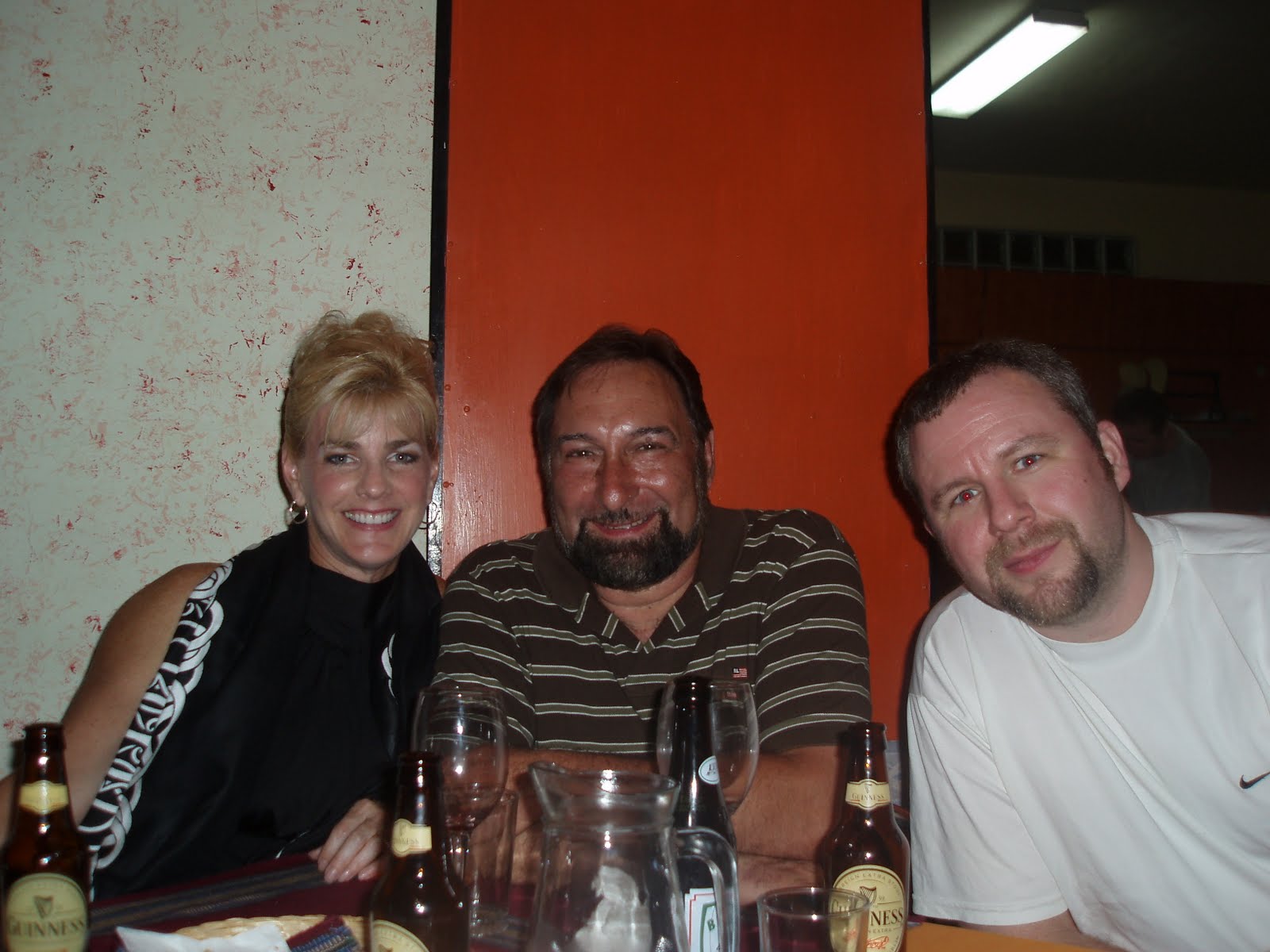
In particular, there was one couple who we grew particularly close to. From what we could glean from the little snippets of their “other life,” they were fairly successful B-list film stars who had decided to buy land in Belize. During the day they would meet their realtor and and visit different properties. Since there are no shuttles that go to and from Parrot Nest (besides Theo dropping off the kids at school), they would often drive us to town on their way to house shopping. I don't know if it was just our age, our resemblance to their own kids (probably more Zack than me), or just natural parenting instinct, but for some reason the took it upon themselves to be our caretakers during the trip. In addition to driving us back and forth, they fawned over us in the way only empty-nesters can. When were around them, we never went hungry or got lost. We joked about them being our “second parents.” To be fair, you can't help but feel a little childish begging for a ride. It's like being 14 years old all over again. As fun as it is to be a rough, free-spirit backpacker, I gotta say, once in a while, it just feels good to be taken care of. I guess kids will always be kids.

Our doting "second parents" and Jim, a guy we met at ATM

P.S. Incidentally, joining Couchsurfing has been one of the best decisions I've ever made. It got me through the rest of Central America, and it has been an immense help in Argentina. I've listed my CS profile as a link, so please feel free to check it out and contact me for more info.